The Range Number on the Brochure Is Not Your Range
Walk into any electric scooter showroom in India today and one number dominates every conversation: claimed range. Brands advertise 120 km. Some promise 150 km. A few bold ones flash figures north of 200 km. Buyers hear these numbers, run the arithmetic in their heads, decide they’re covered, and sign the cheque.
Months later, they discover that their “120 km scooter” is giving them 80 km on a good day — and closer to 70 km when there’s a pillion, a bag of groceries, and Bengaluru traffic factored in. The disappointment is real, common, and almost entirely avoidable.
Here’s what actually matters: what range do you need for your daily commute — and does the scooter you’re considering actually deliver it in the real world?
The Average Indian Commute Is Shorter Than You Think
Most urban Indian riders travel between 15 and 25 km each way to work. That’s a 30–50 km round trip on a typical day. Add the occasional errand, a detour for fuel — or in this case, a longer route to avoid a dug-up road — and you’re looking at 40–60 km per day as a realistic upper bound for the vast majority of daily commuters.
A practical and widely used rule: add a 30–40% buffer to your actual daily distance when choosing a scooter, to account for battery ageing over time and the inevitable bad days. So if you commute 40 km daily, you want a scooter with at least 55–60 km of genuine, real-world range before you need to think about charging.
The key phrase there is real-world range — not the number printed on the brochure.
Why Claimed Range Is Almost Never Your Range
Electric scooters in India are tested under controlled laboratory conditions — flat surfaces, a light test rider, consistent speeds, and ideal temperatures. These tests are standardised, and they’re useful for comparing scooters against each other, but they don’t replicate the chaos of actual Indian roads.
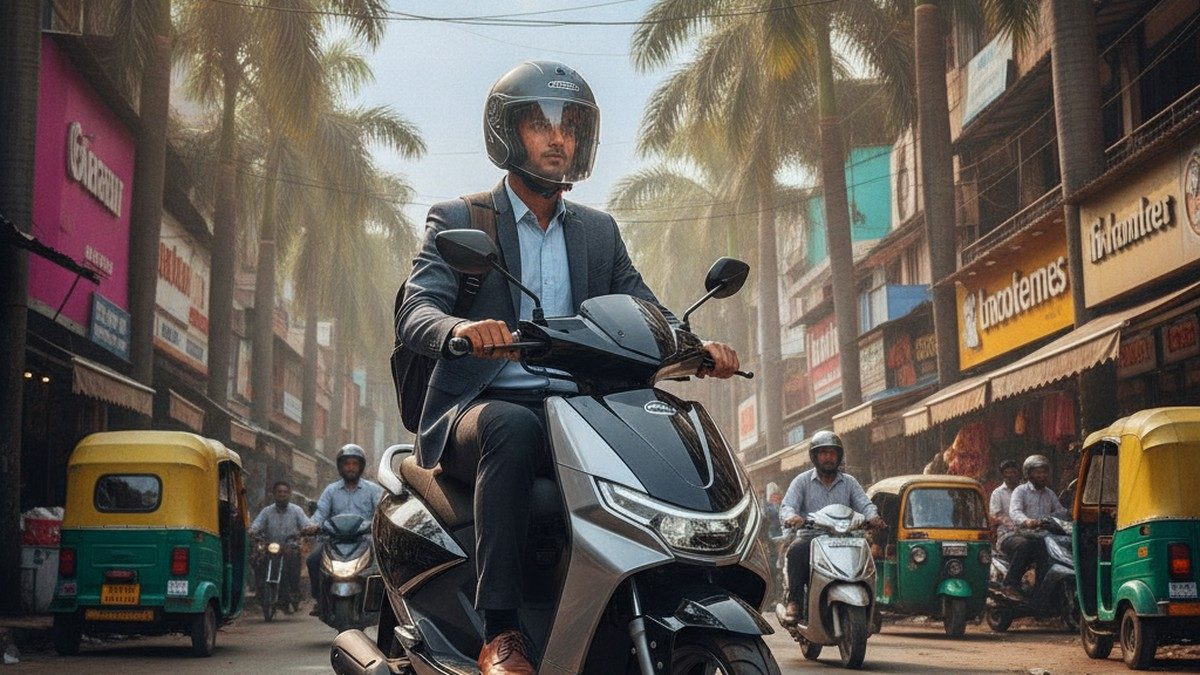
Put the same scooter in Hyderabad traffic on a 42-degree afternoon, with a rider and a laptop bag, navigating flyovers, speed breakers, and grid-locked intersections, and range drops. The typical real-world gap in Indian urban conditions is 20–30% below the claimed figure. For scooters rated at higher speeds or with smaller batteries, that gap can widen to 30–40%.
So a scooter claiming 100 km of range will likely deliver 70–80 km in mixed Indian city riding. A 120 km claim translates to roughly 85–95 km in practice. These are not alarming numbers — they’re just the reality you should plan around before, not after, you buy.
What pushes range down most dramatically in Indian conditions? Heavy traffic with constant acceleration and braking is the biggest culprit — far more than speed. A pillion rider or loaded carry adds another 10–15%. Heat above 38°C reduces usable battery capacity, sometimes by 10% or more. And tyre pressure, which very few riders check regularly, can quietly eat another 5–8% if the tyres are even slightly under-inflated.
What This Means for the Range You Should Actually Buy
Working backwards from real-world data, a 40–60 km daily commuter needs a scooter with genuine, achievable range in the 70–90 km bracket. Scooters with a claimed range of 100–120 km typically land in this zone under Indian conditions, and that’s the sensible sweet spot for most urban buyers.
Buying a scooter with a 150 km or 200 km claimed range is not necessarily wrong — but if you’re covering 40 km a day and charging every night, you’re paying a significant premium for capacity you’ll rarely call on. That extra money might be far better spent on a larger battery warranty, better build quality, or a more established service network.
Conversely, cutting corners with a scooter that claims only 60–70 km is risky. Once real-world conditions trim that figure, and battery capacity begins to degrade after 2–3 years, you can find yourself anxiously watching the range indicator on the way home.
The 80–100 km claimed range bracket — delivering 65–80 km in real-world use — is where the arithmetic actually works for most Indian commuters, particularly those riding 30–50 km daily.
The Market: What You Can Actually Buy
At the premium end, the TVS iQube starts around ₹1.13 lakh and delivers a real-world range of approximately 75–95 km. The Bajaj Chetak, starting near ₹1.10 lakh, offers outstanding build quality and 90–110 km of real-world range. The Ather Rizta, at around ₹1.31 lakh, is an excellent all-round commuter with strong storage and an integrated app ecosystem.
These are good scooters. But they ask you to spend ₹1.1–1.3 lakh for a scooter that will, day-to-day, deliver roughly the same range as well-engineered options available for ₹25,000–₹40,000 less. For buyers who aren’t drawn by brand prestige or the feature-richness of premium connected platforms, that price gap is worth examining honestly.
Where Elektree India Fits Into This Calculation
Elektree India’s commuter lineup — primarily the Zenith and the RV 80 — positions itself squarely in the practical sweet spot for daily riders. The Zenith starts at ₹90,164 and the RV 80 at ₹94,363, both claiming 80–100 km of range with 60V battery configurations. At 60 km/h top speed, they’re built for urban and semi-urban commuting rather than highway performance.
The range claimed by Elektree sits honestly in the bracket appropriate for a daily commuter. A 30–50 km daily rider charging overnight is not pushing these scooters to their limits — they’re working well within their usable capacity, which means the battery cycles are less stressed, degradation is slower, and the effective usable range stays consistent for longer. Regularly deep-discharging a large battery to 5% every day actually wears it out faster than moderate daily use of a appropriately-sized pack.
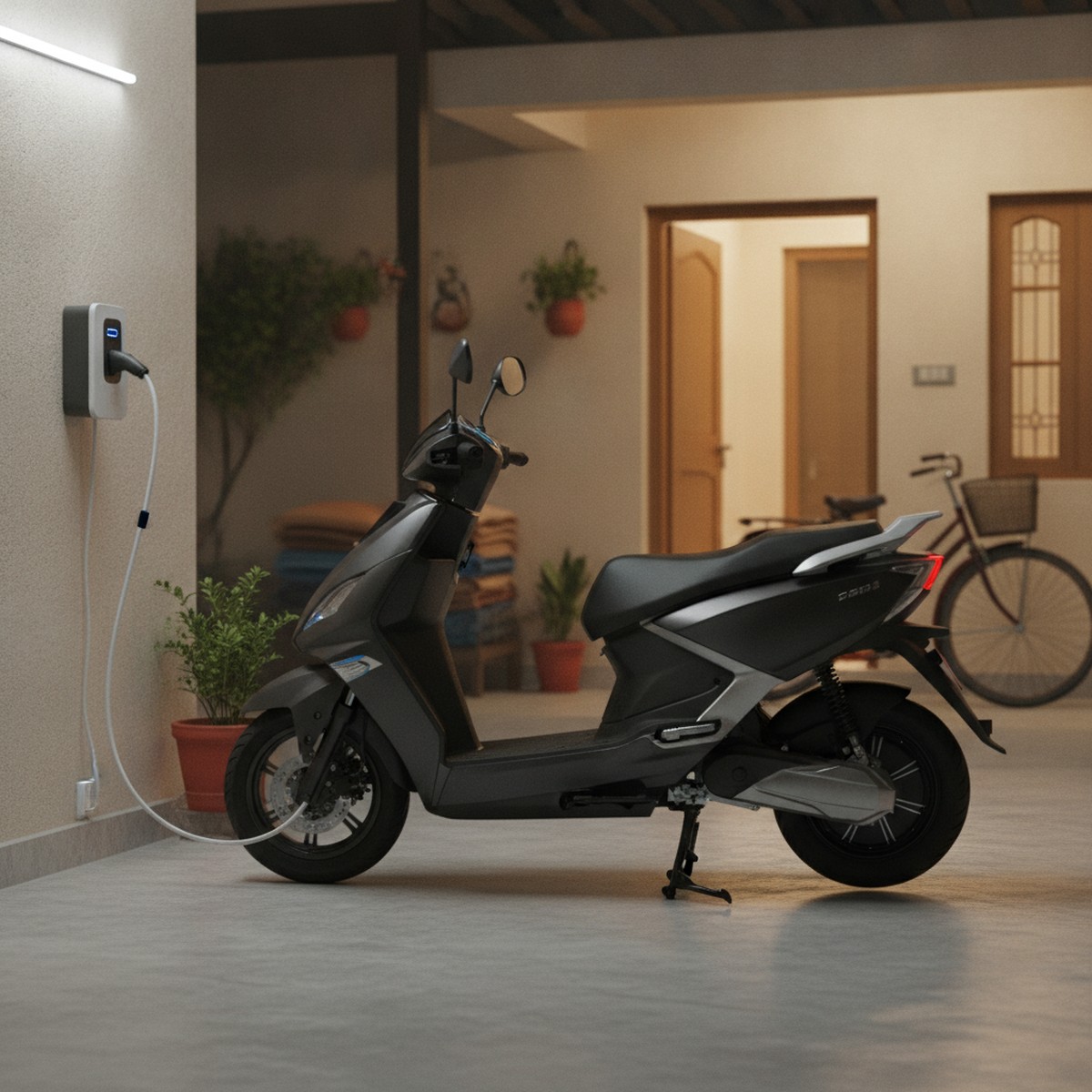
What genuinely sets Elektree apart for the budget-conscious commuter, though, is the warranty proposition. A three-year warranty covering the vehicle, battery, and motor together provides a meaningful safety net at a price point where competing brands are either absent or offer considerably shorter coverage. For a scooter that will run 40–50 km six days a week, knowing the battery is protected for three years removes a significant anxiety from the ownership equation.
Running costs reinforce the value case. Elektree scooters charge for approximately ₹5–₹10 per full charge. A daily commuter charging roughly 25 days a month spends between ₹125 and ₹250 on electricity — against ₹3,000–₹4,500 in petrol for a comparable journey in a 45 km/l petrol scooter. That’s a saving of roughly ₹2,700–₹4,200 per month, meaning the additional cost over a basic petrol alternative pays itself back within 12–18 months for most daily riders.
For Riders Who Do More Than Commute
If your use case extends beyond the daily office run — longer weekend trips, semi-urban routes, or you simply want a larger buffer before charging — Elektree’s Fantom EV is a different category of vehicle entirely. As an electric motorcycle with a claimed range of 150–180 km and a top speed of 110 km/h, it’s designed for riders who need genuine versatility across urban and intercity riding. Starting at ₹1.39 lakh, it competes directly with mid-range petrol motorcycles and brings a running cost that transforms the economics of higher-mileage riding.
The 72V battery options on the Fantom EV mean that even under real-world conditions — loaded, in traffic, on mixed terrain — the effective range stays comfortably above the 100 km mark most days. For a rider averaging 80–100 km daily or making occasional 60–70 km one-way trips, this is the configuration worth serious consideration.

The Honest Recommendation
Most Indian electric scooter buyers are buying more range than they’ll ever use, from brands that price for aspirational appeal rather than everyday economics. The practical commuter question — how many kilometres do you actually cover each day, and does this scooter genuinely cover that distance in real-world conditions? — is simpler and more important than any spec sheet comparison.
For a daily commute of 30–50 km, a scooter delivering 65–80 km of real-world range is exactly what’s needed. Elektree’s Zenith and RV 80 occupy precisely that bracket, at a price point that undercuts most of the established segment by ₹15,000–₹40,000, backed by a three-year warranty that keeps you covered through the first battery degradation cycle.
This isn’t a budget compromise. It’s a practical match between what you need and what you spend — which is, when you think about it, exactly the decision a smart commuter should be making. If you’re shopping for an electric scooter that covers your actual daily distance reliably, costs less to buy, and less to run, Elektree India deserves a close look. You can explore the current range at elektree.com before you visit a showroom.