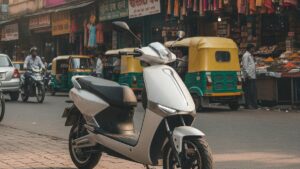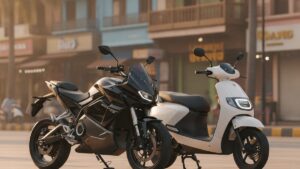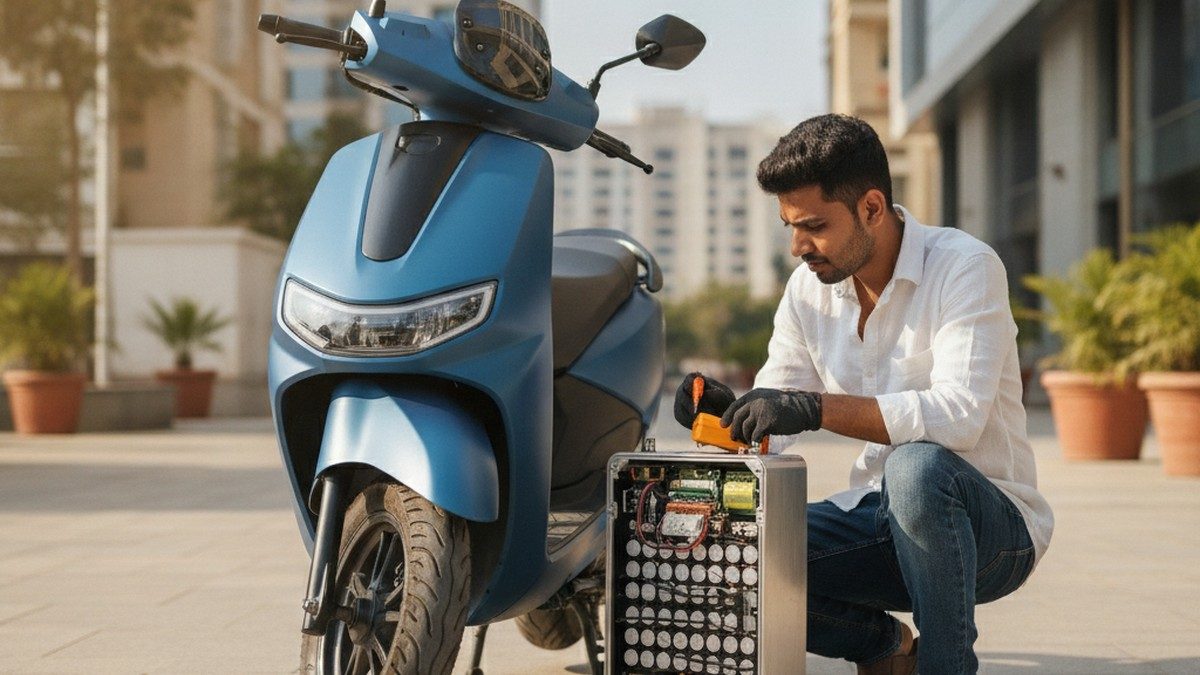
A few years ago, videos of electric scooters bursting into flames circulated on Indian social media with disturbing regularity. Ola Electric. Okinawa. Pure EV. The images were alarming — scooters engulfed in fire in parking lots and on roadsides. The government stepped in, ordered recalls affecting thousands of vehicles, and launched a full investigation.
That period rattled buyer confidence in a way that range anxiety never really did. People weren’t just worried about whether their scooter would make it to the office — they were worried about whether it would still be intact by morning if they charged it overnight.
Here’s the thing: those incidents triggered something genuinely important. India now has one of the more rigorous electric two-wheeler battery safety frameworks in the world, and most established manufacturers today sell scooters that have passed through serious certification processes. The problem is that buyers often don’t know how to tell the difference between a well-engineered battery system and one that merely looks the part on a spec sheet.
What Actually Caused Those Fires
Almost every EV fire traces back to one root cause: thermal runaway. This is when a lithium cell overheats, releases energy faster than it can dissipate it, and triggers a chain reaction that can spread to adjacent cells within seconds. In a scooter battery pack with dozens or hundreds of cells packed tightly together, the consequences are dramatic.
The conditions that trigger thermal runaway are well understood: overcharging, physical damage, extreme temperatures, and manufacturing defects that allow cells to degrade unevenly. In several recalled Indian scooters, the problems traced to poor-quality cells, inadequate Battery Management Systems (BMS) that failed to cut power when cells misbehaved, and gaps in quality control.
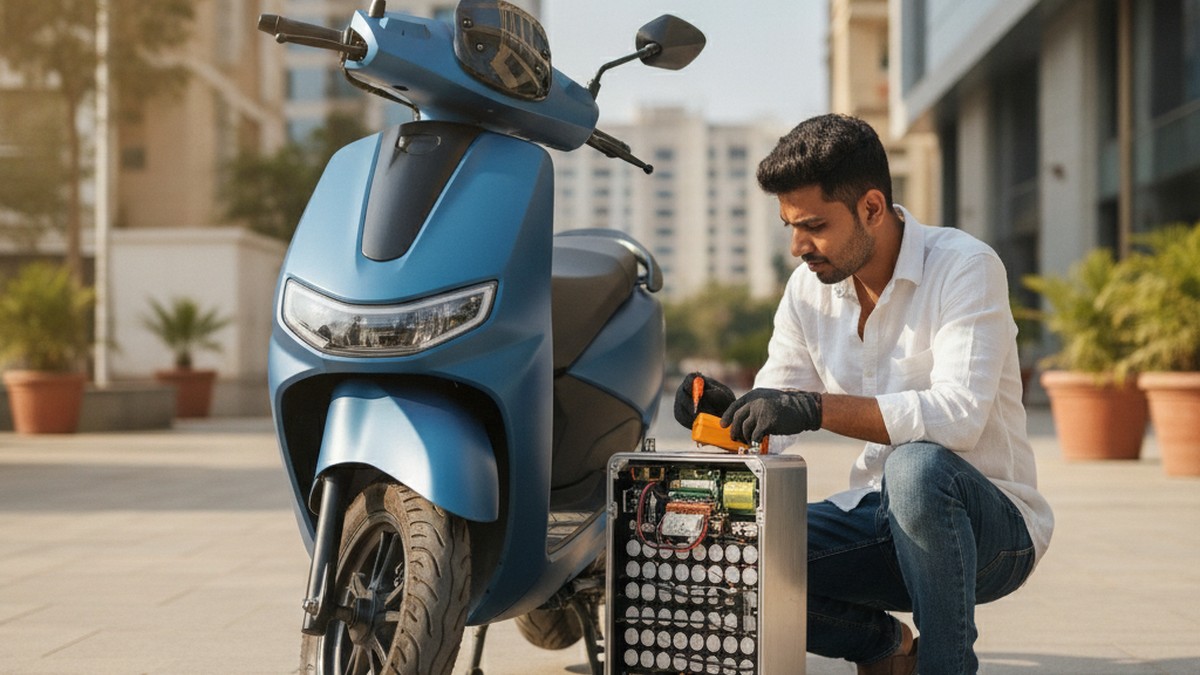
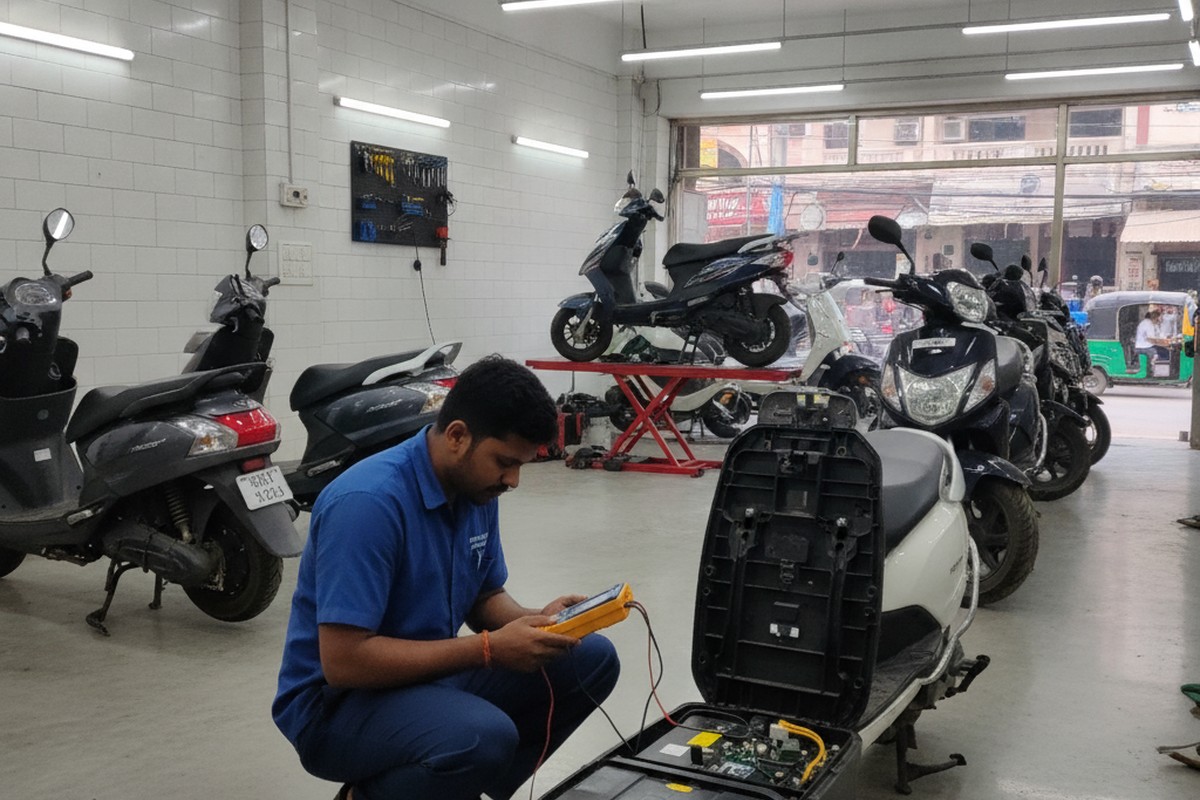
The BMS is the real gatekeeper here. A properly designed BMS monitors every cell in the pack, controls charging and discharging rates, balances load across cells, and disconnects the circuit if temperature, voltage, or current readings go outside safe limits. A cheap or poorly calibrated BMS can miss the warning signs entirely until it’s too late.
What AIS 156 Phase 2 Actually Requires
Following those fire incidents, the government introduced and significantly strengthened AIS 156 — the mandatory safety standard for electric two-wheeler battery systems. Phase 1 came into effect in late 2022, covering cell traceability, safety fuses, and basic BMS protections. Phase 2, enforced from March 2023, went considerably further and is what serious buyers should be asking about today.
Phase 2 introduced two tests that matter most to buyers. The thermal propagation test deliberately triggers thermal runaway in a single cell and measures whether fire spreads to adjacent cells. The standard requires an audio-visual warning to the rider before any propagation occurs, and the pack must not catch fire or explode during the test. Phase 2 also mandates at least four temperature sensors inside the BMS — not one or two as was common earlier — so the system can detect a hot spot early rather than waiting for a cell to fail.
The second critical test is the IPx7 water ingress test. The battery pack is submerged and tested at full charge to confirm there is no fire or explosion risk from water exposure. Given that Indian monsoons regularly turn streets into rivers, this is not a formality — it reflects a real condition every scooter sold here will face repeatedly over its lifetime.
For a battery pack to carry AIS 156 Phase 2 certification, it must have passed these tests at an accredited facility — typically ARAI or ICAT. A compliant battery will have a documented test report number that is traceable. A dealer who can’t show you that documentation is a dealer you should approach with caution.
The Questions You Need to Ask in the Showroom
Walk into any electric scooter showroom and the conversation usually revolves around range, top speed, and monthly EMI. Rarely will a dealer volunteer information about battery safety certifications — not because they’re hiding something, but because most buyers don’t ask. That gives you an immediate advantage if you do.
Ask specifically: Is this scooter’s battery AIS 156 Phase 2 certified? Can you show me the compliance documentation? What is the IP rating on the battery pack? What does the BMS protect against? A dealer selling a genuinely certified product will have answers — or can get them from the manufacturer quickly. Vague responses without documentation should make you slow down before committing.
Also ask about the battery warranty specifically, not just the overall scooter warranty. A manufacturer confident in their battery quality backs it with a meaningful warranty period. Understand what’s covered: complete failure only, or also capacity degradation below a certain threshold?
Don’t overlook the charger either. AIS 156 Phase 2 includes requirements for earth leakage detection in chargers because the charging phase — particularly overnight charging at home — is when many incidents occur. Use only the charger supplied with your scooter. Charging in a cool, ventilated area is always preferable to a confined space like a lift lobby where heat builds up.
How to Think About Safety When Comparing Brands
India’s electric scooter market in 2026 ranges from nationally known brands with large service networks to smaller regional manufacturers competing on price alone. Battery safety is one of the clearest ways to separate genuinely engineered products from those that are merely assembled and badged.
The certification to look for isn’t only AIS 156. ICAT approval of the complete vehicle — not just the battery in isolation — means the scooter has been assessed as an integrated system by a government-recognised body. Safety in an electric scooter isn’t just about the cells; it’s about how the BMS integrates with the electrical architecture, how the charger communicates with the pack, and how the entire system responds under stress.
Smaller manufacturers importing cells from overseas suppliers without rigorous quality checks remain a genuine risk. A low upfront price with no battery traceability, no BMS documentation, and a one-year “manufacturing defects only” warranty is telling you something.
Where Elektree Stands on Safety
Elektree India’s scooters — the Zenith, the RV80, and the Wheels — are ICAT certified as complete vehicles. That certification matters in this context because ICAT approval is not a rubber stamp: it means the vehicle was assessed as an integrated system by the International Centre for Automotive Technology, one of India’s two primary government-recognised automotive testing bodies.
The Zenith and RV80 both deliver a 60 km/h top speed with a claimed range of 80–100 km per charge — a comfortable fit for the daily commuting patterns of most Indian city riders. Priced from around ₹90,000–₹94,000, they come with a three-year warranty on the lithium-ion battery, anti-theft alarm, and GPS as standard. The entry-level Wheels model, starting around ₹82,000, offers 45 km/h and 50–70 km range — appropriate for urban neighbourhoods where the lower speed also means no licence requirement applies.
The 3-year battery warranty is a meaningful signal. Elektree would not offer that coverage unless they had genuine confidence in the durability and safety of their battery systems. A manufacturer uncertain about their battery quality tends to shorten the coverage period or hedge the warranty language — the opposite of what you see here. The ₹5–10 per charge running cost and roughly four-hour charging time are consistent with well-calibrated lithium-ion systems that don’t demand the aggressive fast-charging rates that stress cells over time.
The Recommendation
If you are seriously considering an electric scooter in 2026, battery safety should be the first filter you apply — before price, before range, before colour options. The good news is that India’s regulatory landscape has genuinely improved since 2022. A scooter from a mainstream, certification-compliant manufacturer today is a materially safer product than what was being sold during those headline-grabbing fire incidents.
What that means practically: buy from a brand with documented ICAT approval, ask for AIS 156 compliance records, verify the IP rating on the battery pack, and read the battery warranty carefully before you sign. These are not obscure technical demands — any serious manufacturer should be able to answer them immediately and in writing.
Elektree India’s ICAT-certified lineup — the Zenith, RV80, and Wheels — represents exactly the kind of engineering-grounded approach that Indian buyers should be gravitating toward in 2026. With a 3-year battery warranty, competitive pricing, and the backing of government-recognised vehicle certification, Elektree offers a combination of reliability, practicality, and post-purchase confidence that matters as much as the range figure on the brochure.
The era of crossing your fingers and hoping your scooter doesn’t become a fire statistic is behind us — provided you buy from the right manufacturer. Ask the right questions, verify the credentials, and you’ll find the answer consistently points toward brands that have done the engineering properly. Explore the Elektree range at elektree.com and make your next scooter decision an informed one.